


Influence of Temperature on PM2.5 concentration over major cities in India during April and May
Release date: July 2024
Heatwaves and extremely high temperatures over the past few months have been a cause of concern across the country. However, a new study finds that it might have been a double whammy with high pollution levels as well. Climate Trends studied the worrying connection between meteorology and air quality in five big Indian cities: Delhi, Lucknow, Kolkata, Mumbai and Patna. Researchers examined these cities in April and May over a period of three years from 2022 to 2024.
Looking beyond particulate matter in our cities’ air
Release date: June 2024
When the country grapples with high pollution levels in the winter months, it isn’t just particulate matter that is a cause for concern. While the focus remains on PM levels during the period, high concentrations of other pollutants like PM2.5, PM10, NO2, SO2, CO, and Ozone add to the disease burden. This analysis attempts to bring attention to other pollutants in some major cities beginning with two months this year – January and February. We will routinely track the pollutants throughout this year to draw comparisons and understand the trends better.
Analysis: Winter air in Indian cities
Release date: 02, April 2024
The analysis reflected on PM2.5 level trends during the winter season for the past two years in seven major cities in India. The report obtained air quality data for various cities from the Central Pollution Control Board (CPCB) website for October to February, covering 2022-23 and 2023-24.
Five years of the National Clean Air Programme (January 2024)
Release date: January 10, 2024
The five-year analysis of the programme presents a nuanced picture of the strides and persistent challenges in improving air quality. The report reveals a mixed scenario, showcasing significant reductions in PM2.5 and PM10 levels in cities like Varanasi, Agra and Jodhpur while certain other cities grapple with escalating pollution concentrations.
Urban-Rural satellite analysis for 2017-2022 (June 2023)
Release date: June 15, 2023
As air pollution mitigation strengthens in the cities under the National Clean Air Programme, a recent analysis by Climate Trends brought attention to the rural regions in the country. The analysis used the SAANS satellite data and found that dangerous levels of particulate matter affect the rural regions too. Data from 2017 showed that PM levels have dipped across both urban and rural regions despite programmes focusing on cities making a stronger case for airshed management.

Mumbai’s unusually high air pollution levels in February 2023: An Analysis
Release date: March 29, 2023
As Mumbai’s air pollution levels remained the talk of the town this winter season, NCAP Tracker analysed data from CPCB’s Continuous Ambient Air Quality Stations (CAAQMS) to see how the city’s PM levels in February 2023 were as compared to the previous years.
Four years of the country’s flagship National Clean Air Programme - What have we achieved?
Release date: Jan 10, 2023
Since its launch on January 10, 2019, over Rs ₹6897.06 crores have been released to 131 cities for air pollution management measures under the country’s flagship National Clean Air Programme. Four years since, NCAP Tracker analysed air quality data from the Central Pollution Control Board to evaluate the progress these cities have made. Data shows that some of the top polluted non-attainment cities in 2019 have marginally improved their PM 2.5 and PM 10 levels but continue to breach the Central Pollution Control Board’s safe limits. Most of the least polluted cities in 2019, however, have seen an increase in PM 2.5 and PM 10 levels.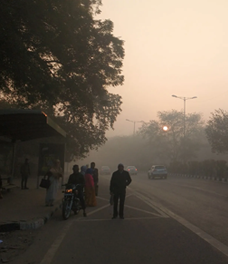
Absence of winter rains keep pollution levels high across Indo-Gangetic Plains
Release date: December 22, 2022
The Air Quality Index in several cities in North India remained impacted in December by the lack of winter rains and despite nil contribution of stubble burning. Data shows that while cities must cut emissions across sectors and at the source, weather conditions inconsistent due to climate change also have an impact.
Engagement of Urban Local Bodies (ULBs) in Air Pollution Control in Delhi: Behavioral Change; A Communication-based Approach
Release date: 25 November 2022
The study by Climate Trends and Earth Root Foundation found that Municipal Corporation of Delhi (MCD) officials were aware of air pollution, but national policies and health impacts of air pollution were lesser-known among the implementing agency’s field workers. Researchers conducted in-depth interviews with various levels of staff from MCD to understand their knowledge, awareness and attitude toward air pollution. Most respondents (94.8%) were aware of the term ‘air pollution,’ but National Clean Air Program (NCAP) and City Action Plans (CAPs) aren’t common terminologies among staffers. Only about 72.4% of engineers and 53% of the inspectors were aware of the national policies concerning air pollution.
Air pollution in October 2022 higher than 2021 in many cities across the Indo-Gangetic belt
Release date: 4 November 2022
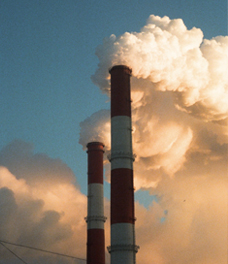
As the first winter month (October) of this year wrapped up, analysis by NCAP Tracker, showed that average PM 2.5 levels were higher as compared to October 2021 in the capital cities of Delhi, Chandigarh, Lucknow and Patna. The PM2.5 levels in October 2022 surpassed those in October 2021, despite the delayed withdrawal of monsoon and a cleaner Diwali in comparison across the last 5 years. The rains also delayed the stubble-burning season this year. The only exception was Kolkata which saw a decrease in levels compared to last year.
An analysis of Delhi's air pollution post Diwali 2022
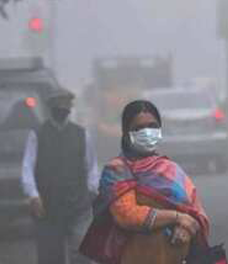
Each year, air pollution levels spike in the Indo-Gangetic Plain on the day after Diwali with grey skies and hard-to-breathe air. This results from several meteorological factors, the stubble burning in neighbouring states and increased local emissions due to the firecracker use. NCAP Tracker of data from CPCB’s 33 monitors in Delhi showed that PM 2.5 levels in the capital city this year were lower than in 2021 but continued to be above the daily safe limits of 60 ug/m3. A lot of meteorological factors, such as wind speed, wind direction and warmer temperatures, played a role in the lower pollution levels in Delhi.
CROP RESIDUE BURNING - THE SOLUTIONS
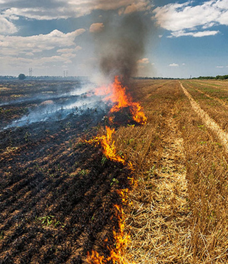
The United Nations International Day of Clean Air for Blue Skies on September 7 comes at a time when we stare at the crop residue burning and winter season during which air quality levels in large parts of the country touch hazardous limits. Climate Trends looks at possible solutions for crop residue burning, which have been cited in credible research and policy efforts. These have been vetted by scientists and experts working in this space.
Health effects of short and long-term air pollution exposure: Evidence from a survey of residents living in rural and urban regions near Kolkata
A first-of-its-kind study generates evidence on the health impacts of air pollution amongst varying segments of the population in West Bengal. In the winter season of 2021-22, a field survey was conducted across seven regions in Kolkata, Howrah, Asansol, Haldia, Barrackpore, Bardhhaman and Barasat in West Bengal – to assess the impact of air pollution on public health.

Summer 2022: A recap of the air pollution levels in 10 cities
Release date: 6 July 2022
As summer wrapped up, NCAP Tracker looked back at air pollution levels in 10 cities – Agra, Bengaluru, Chandigarh, Chennai, Delhi, Kolkata, Jodhpur, Mumbai, Lucknow and Patna. A deep dive into air pollution data of the Central Pollution Control Board (CPCB) by the NCAP Tracker showed that monthly PM 2.5 and PM 10 levels during the summer months breached the annual CPCB safe limits of 40 ug/m3 and 60 ug/m3 respectively during most months.

Recommendations: Road to Meeting India’s National clean air goals: Hurdles & Solutions
More than three years into India’s National Clean Air Programme (NCAP), central and state governments have taken multiple mitigation measures to reduce air pollution. Recent ground research proves that there is a disconnect in the understanding of the relevance and scale of the problem in the ULBs and their role and awareness in tackling this crisis. The gaps in these linkages towards effective ground implementation are one of the key factors which require strengthening. Multidimensional coordination is required along with the political will and administrative compliance and action for effective mitigation. This report is a set of recommendations that came out of a discussion organised by Climate Trends involving 14 key representatives from inplementing agencies responsible for managing India’s air pollution crisis.

Uttar Pradesh Survey
As Uttar Pradesh goes to polls in February 2022, a perception survey among its citizens showed that climate action by political parties could sway their voting preference. The survey, conducted by Climate Trends and YouGov showed that 86% of the respondents felt that there is an urgent need to tackle climate change and a nearly equal number (87%) said climate change was important to their electoral vote.

Three years of the National Clean Air Programme: A status check
Three years since the National Clean Air Programme (NCAP) was implemented across India to reduce particulate matter levels in 132 cities by 20-30%, data shows there has been little or no progress on the ground. This report is an analysis of the government’s air quality data which shows that not only have most non-attainment cities reduced PM 2.5 and PM 10 levels only marginally but some have also recorded an increase.

Nitrogen Dioxide Levels: An Analysis of States crossing safety standards (September 2021)
A detailed analysis of emissions data Delhi, Uttar Pradesh, and Rajasthan show that annual NO2 levels routinely breach the Central Pollution Control Board’s (CPCB) 40 ug/m3 annual safety limit and 80 ug/m3 24hr safe limit. Delhi has since 2013 not been able to maintain levels within CPCB’s annual average even once.

Key recommendations on opportunities for addressing air pollution in South Asia
Release date: August 19, 2021
Outcome of a webinar – Opportunities for Addressing Air Pollution in South Asia, organised by Climate Trends and the International Centre for Integrated Mountain Development (ICIMOD) the recommendations focus on the solutions for the challenges that air pollution poses for the developing economies of South Asia.
Air Quality Trends in Uttar Pradesh and the Way forward
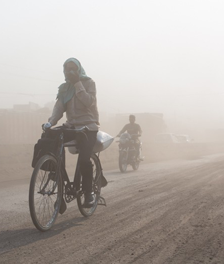
The report analyses average PM data from 25 CAAQMS in Uttar Pradesh from January 2017 to July 2021 to recommend a better monitoring network, an airshed approach and bring health to the forefront in the state’s air pollution fight.

Maharashtra Clean Air Action Plans - A status check (December 2020)
Release date: December 9, 2021
Decoding the Clean Air Action Plans for each 17 non-attainment cities and Vasai-Virar in Maharashtra, revealed that vehicular emissions are the state’s top priority for air pollution management, claiming 314 out of 806 total measures. At 139 measures, industrial emissions ranked second and resuspended dust gathered the third rank with 108 control options. An analysis also revealed that all the city action plans categorize the control options into high, medium or low impact without a definition, measure or uniformity. Similarly,
implementation timelines of short, mid and long term are not defined either.

One for All, All for One: Inter-state Coordination on Air Pollution in the Indo-Gangetic Plain (Novem 2019)
40% of India’s population living in the Indo-Gangetic Plains (IGP) is exposed round the year to extreme levels of particulate matter, fossil gases, VOCs and smoke. The report documents the factors contributing to this persistent air pollution that are not specifically addressed in National Clean Air Program (NCAP) city plans and recommends modalities of an inter-state regional coordination mechanism to address sources that affect the entire region although they are situated outside the jurisdiction limits of cities.
Unknown Hurdles to A Trillion Dollar Economy: Solving Air Pollution in Maharashtra (August 2019)
Maharashtra has the most number of cities in the NCAP indicating the level of wide-spread pollution in the rich, industrialised, and agrarian state. Even with the 20-30% reduction targetted over the next five years, the NCAP will not meet national permissible limits in 16 out of 26 non- compliant cities of the state. The report identifies sources left out in pollution mitigation planning and gaps in policies of sectors that affect air quality as well as hurt the state economy’s plans to achieve US$ 1 trillion GDP.

Political Leaders Position & Action on Air Quality: Indian MPs report-card 2014-19 (April 2019)
This report presents a review of the political leadership, position and statements provided by the Members of Parliament (MPs) in the 14 cities of India ranked by WHO in 2018 as the world’s most polluted cities.